Why Driveway Maintenance Is Important During Summer?
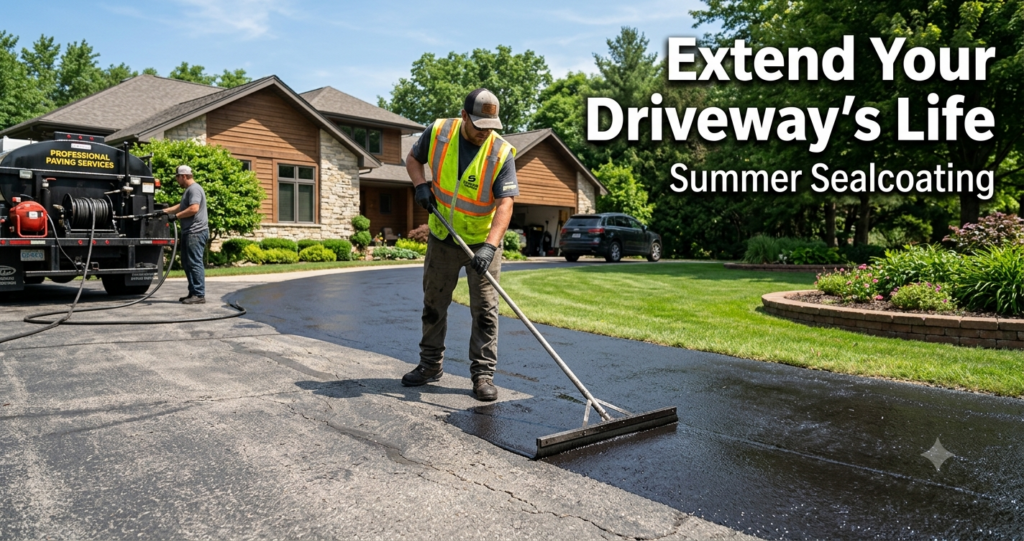
Summer is finally here. For most of us, this season means a time for family road trips, beach vacations, and quintessential backyard traditions like barbecues. However, while we are all busy making the most of the summer weather, our asphalt driveways are quietly taking a beating. High temperatures, UV radiation, heavy summer storms, and increased vehicle traffic can slowly wear down pavement surfaces. If you do not take proper care of your driveway during the summer, small cracks and surface fading can quickly turn into potholes, drainage problems, and costly repairs. If you have been ignoring driveway maintenance so far, it is important to understand that it is not just about appearance. It is more about protecting the structural integrity of your pavement and extending its lifespan. Preventative care, which involves sealcoating, crack filling, and routine inspections, can help reduce long-term repair costs while also improving curb appeal. The invisible threat: UV rays and extreme heat Have you ever tried walking barefoot down your driveway in July? It is not something we will recommend anyone to do. Asphalt is dark, so it absorbs a massive amount of solar radiation. According to the National Weather Service, when the ambient air temperature is 90°F, asphalt surfaces can easily reach a scorching 140°F or more. This extreme heat can soften the asphalt, making it more susceptible to tire marks and indentations from heavy vehicles. More importantly, the sun’s intense ultraviolet (UV) rays bake your driveway day in and day out. This constant UV exposure causes oxidation, which tends to dry out the essential oils and binders in the asphalt. As the oils evaporate, the asphalt turns from a rich, protective black to a dull, faded grey. The pavement becomes brittle, loses its flexibility, and begins to crack under the weight of everyday traffic. Small cracks could mean bigger problems One of the biggest mistakes we often see homeowners making is ignoring small cracks during the summer. Remember, even hairline cracks allow water to seep below the surface. When moisture reaches the base layer, it weakens the foundation of the driveway and increases the risk of potholes forming. Moreover, summer thunderstorms and heavy rainfall can make the problem worse. Water infiltration combined with heat stress can cause cracks to widen much faster. By addressing these cracks early, you can significantly reduce the likelihood of major structural damage. Considering all the risks, we recommend routine inspections during the summer to help identify trouble spots before they become expensive issues. Filling cracks early is far more affordable than replacing entire sections of damaged pavement. The protective power of driveway sealcoating If you are looking for an effective, long-term protection strategy for your asphalt driveway, especially during the warmer months, seal coating is your answer. A quality sealant forms a waterproof barrier that shields the pavement from UV rays, oil, gasoline, and water, helping to slow down oxidation and prevent surface cracks. Studies and industry reports routinely show that properly maintained and sealed asphalt can last substantially longer than unsealed surfaces, with some estimates suggesting life‑span extensions of up to 50% when sealcoating is applied regularly. For homeowners, this translates directly into cost savings. Addressing minor fading and tiny cracks with a professional sealcoating service is far cheaper than waiting for potholes or base failures that require patching, resurfacing, or full replacement. Depending on the region, we recommend resealing every two to three years, timed to late spring or early summer when temperatures are warm and dry enough to ensure proper curing. Summer is the best time for driveway maintenance Summer offers ideal conditions for both cleaning and sealing driveways. Warmer days allow cleaners and sealers to dry evenly, and dry spells give contractors a reliable window to apply coatings without rain interrupting adhesion. In Connecticut‑style climates, we often see the strongest results when driveways are cleaned, repaired, and sealed between late May and September, aligning with the “paving and sealcoating season” in the Northeast. During this period, our professional team can also address issues like: Filling cracks and small potholes before they worsen. Power‑washing away oil spots, pollen, and organic buildup that can trap moisture and accelerate deterioration. Restoring the driveway’s deep, black finish so it enhances curb appeal rather than hinting at future repairs. Let pros handle the maintenance While you may be tempted to run to the hardware store for a few buckets of sealant, you must understand that DIY applications often result in uneven coats, peeling, and inadequate protection. To truly protect your home’s curb appeal and structural integrity, it is always best to rely on professional driveway maintenance services. At AW Sealcoating, our experts understand exactly how the summer heat interacts with asphalt. We use commercial-grade materials and precise application techniques to ensure your driveway looks immaculate and remains protected against the harshest elements. Don’t let the summer sun bake the life out of your pavement. Schedule your maintenance today and enjoy a flawless driveway for years to come. Tags: Startup Business Top Rated Popular Category AI Modeling & Remodeling (20) Application Services (08) Technology Innovation (15) Automation (22) Ecosystem Services (12) Data & Analytics (06) Popular Category No posts found!